
Egg Colors: What Determines Shell Color
Breed genetics set shell color, not nutrition. Here is what determines egg color and what actually changes the yolk.
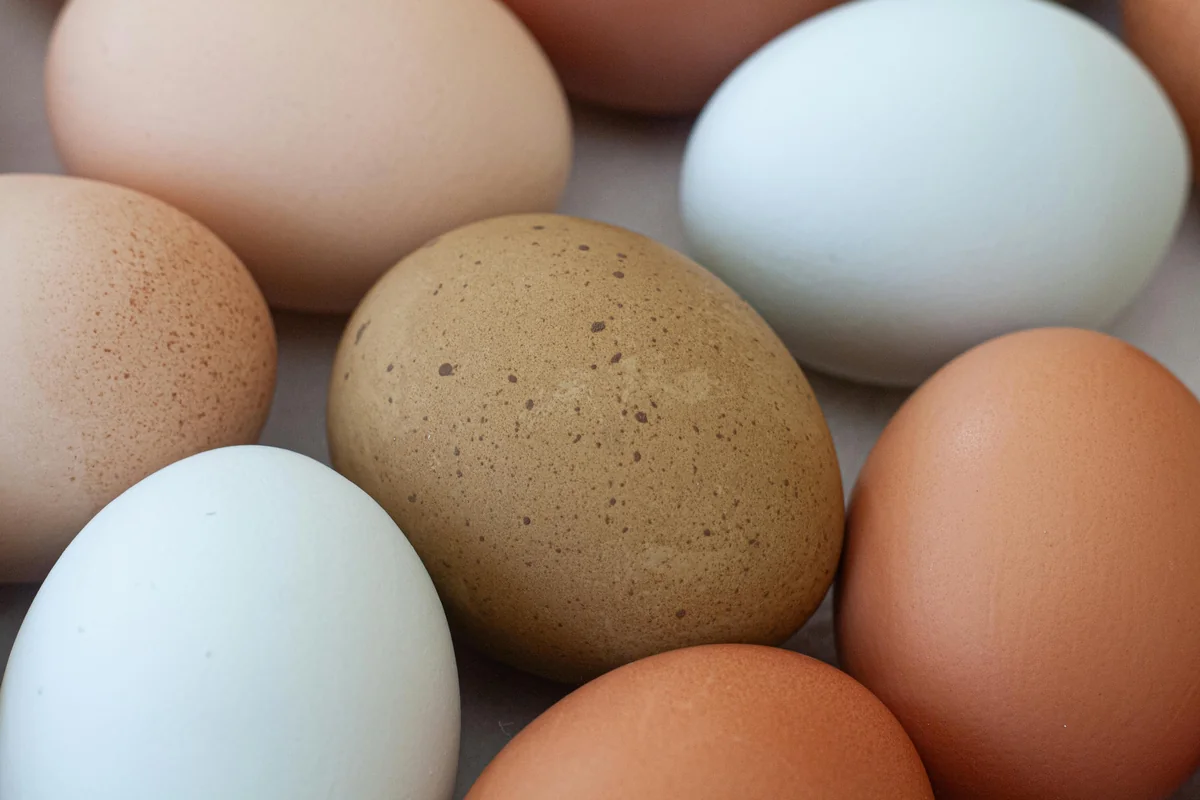
People often ask whether brown, white, blue, or speckled eggs are healthier. Short answer: shell color is mostly genetics. It doesn't decide how nutritious the egg is.
Brown eggs often come from breeds like Rhode Island Reds and Barred Rocks. White eggs are classic from Leghorns. Our blue eggs come from Ameraucana hens (hello, Bluebell), and speckled shells from birds like Welsummers, Dotty's specialty.
What actually changes the egg
Diet and lifestyle matter far more than shell color. Free-range hens that eat insects, plants, and quality feed lay eggs with deeper yolks and higher levels of omega-3s, vitamins E and D, and beta carotene compared with many caged birds on a narrow ration.
That's why our cartons look like a rainbow and still taste consistently good. Color is variety. Pasture is nutrition.
Pick by preference, or grab a mixed dozen
Want blue eggs for a brunch board, brown for baking, or a mix for the fridge? Call Bearded Farms in Sandston to check this week's availability and reserve a dozen.
Common questions about egg colors
What determines egg color?
Egg shell color comes from breed genetics. Hens deposit pigments during shell formation: protoporphyrin tints brown shells, while biliverdin gives blue and green tones in breeds like Ameraucanas.
Why are eggs different colors?
Different breeds lay different shell colors, so a mixed flock produces white, brown, blue, and speckled eggs. Shell color does not change nutrition; diet and pasture access matter more for yolk quality.
Questions about eggs or chicks in Sandston and New Kent County, VA? .
Back to all posts